Redesigning the fault-raising architecture for a utility company's CRM migration, replacing error-prone manual processes with structured, validation-led decision flows.
[001] THE PROBLEM
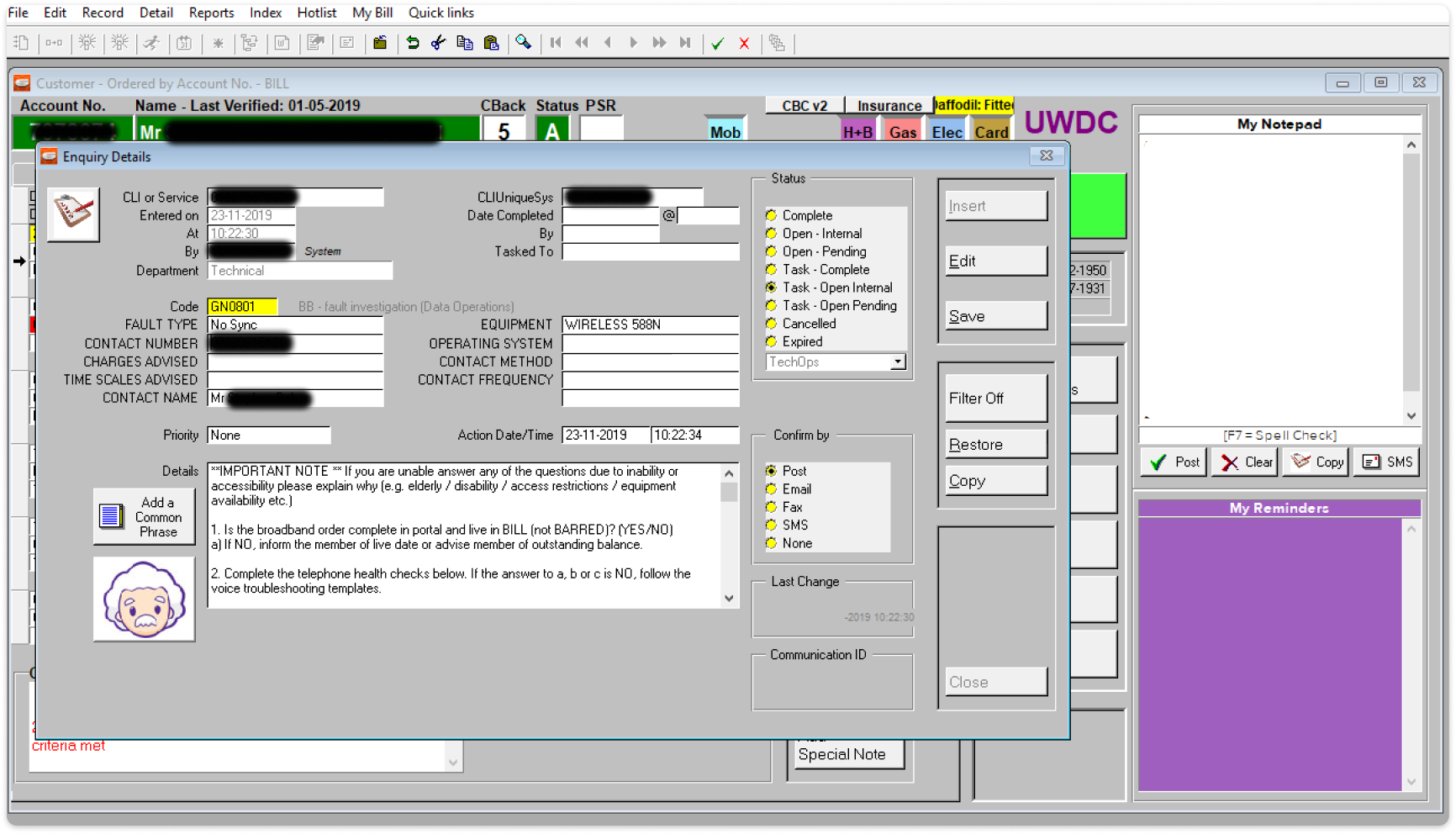
Utility Warehouse had paid £1 million in fines the previous year for incorrectly dispatched engineers. Over 40% of fault submissions required manual correction, and advisers had no way to know whether a ticket was complete enough to action downstream.
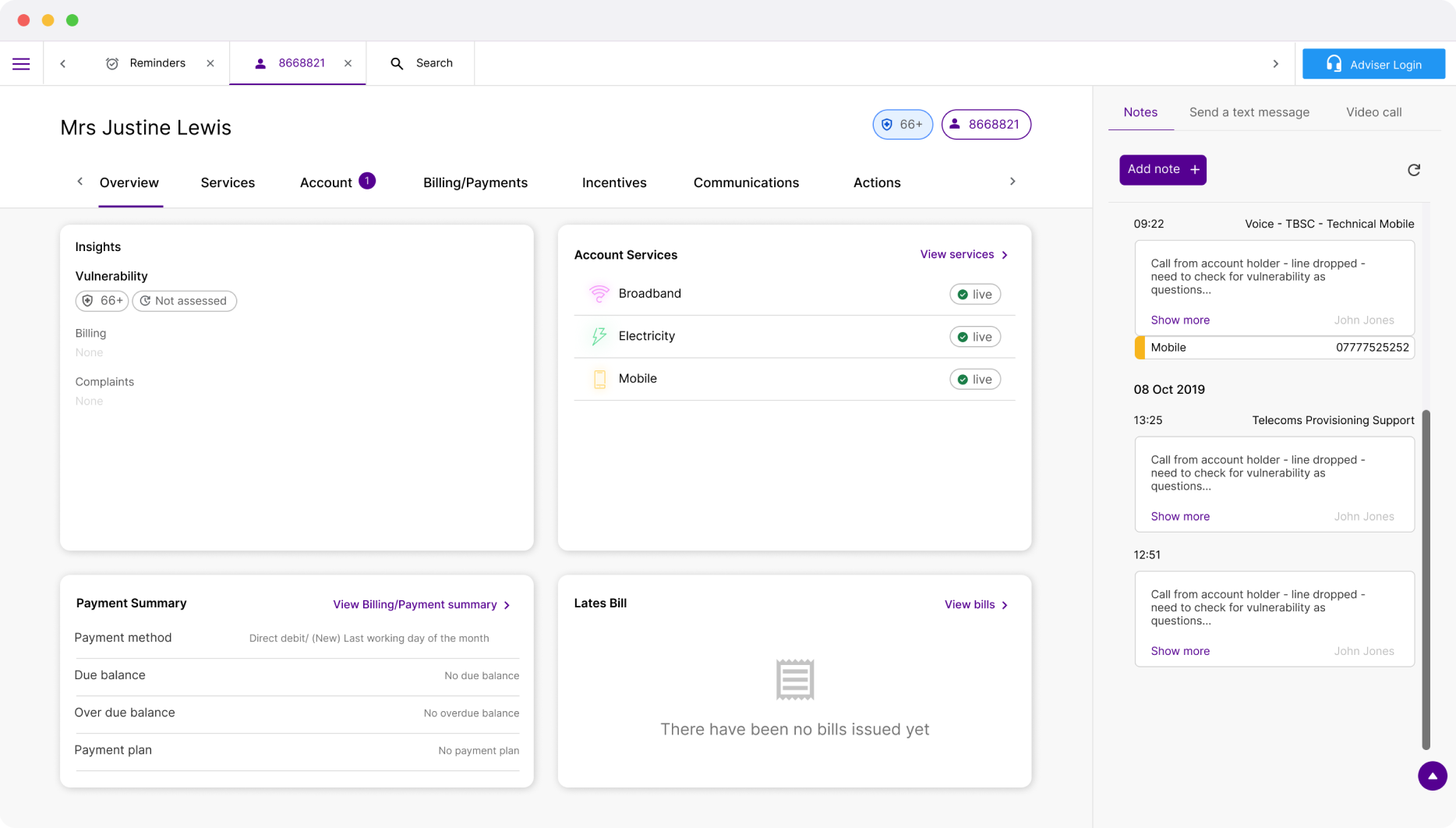
The company was migrating from its legacy CRM (BILL) to a new platform, William. This created both the necessity and opportunity to redesign the fault architecture from first principles.
[002] THE INSIGHT
The legacy system relied on manual fault code entry with no validation. Errors passed downstream unchecked and duplicate tickets were common.
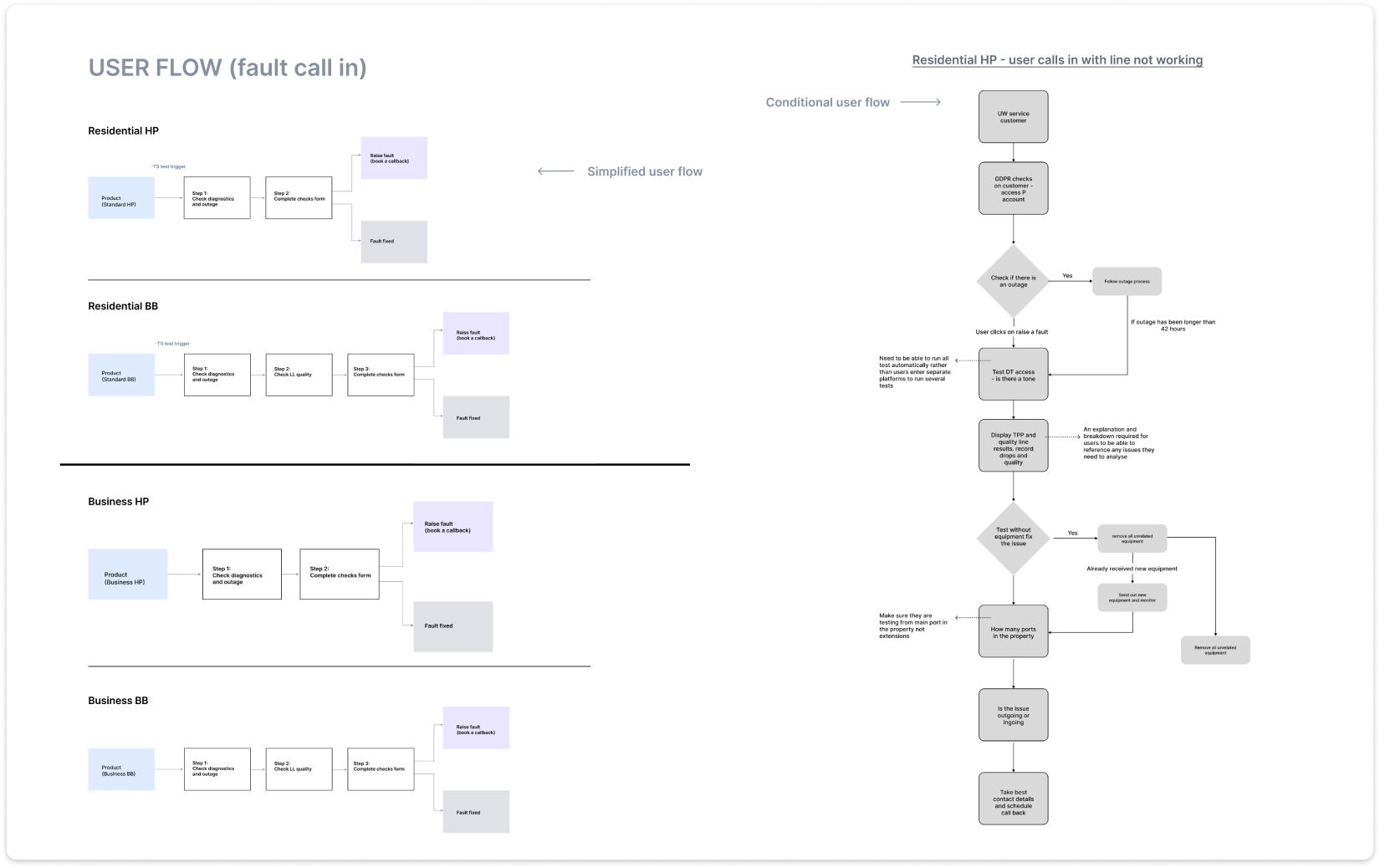
I mapped the full operational journey across residential and business broadband, home phone flows, diagnostic checkpoints, escalation triggers, and engineer handover criteria. I then ran cross-functional workshops with advisers, engineers, and operations leadership.
The issue wasn't that advisers were careless. They were operating within a system that allowed errors to propagate without validation. The interface needed to take responsibility for decision quality, not leave it to individual judgement.
[003] THE SOLUTION
Mapping the full operational system revealed undocumented variations across teams. The issue wasn't screen design, it was decision architecture.
There was pressure to replicate the legacy workflows to accelerate migration. But the inefficiencies were embedded in the legacy logic itself. I advocated for redesigning from first principles.
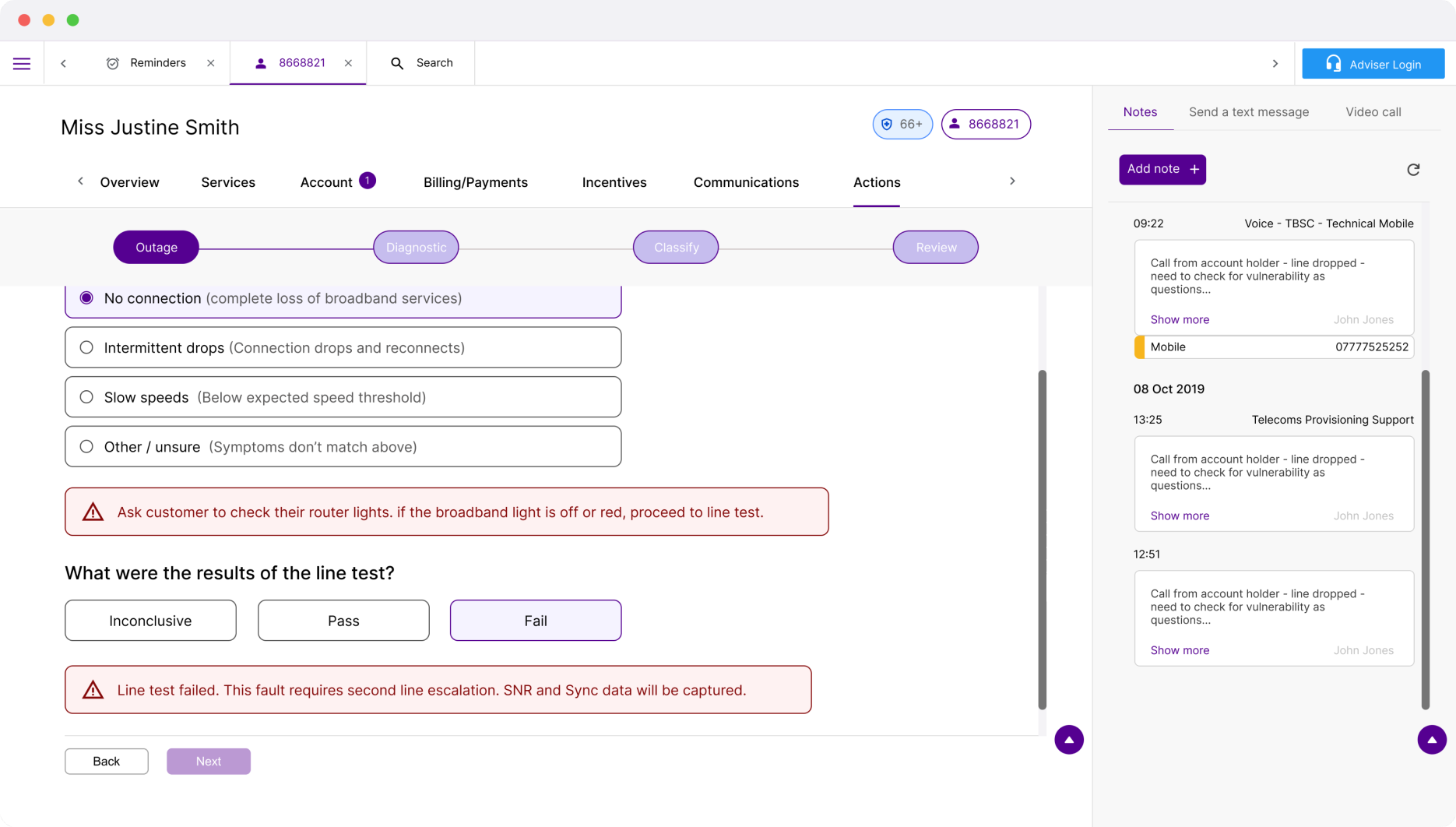
Progressive disclosure surfaced only the relevant diagnostic path at each stage. Context-aware guidance replaced free-text interpretation. Inline validation caught errors before escalation. And structured ticket submission replaced the open templates that had let incomplete tickets through.
[004] RESULTS
5 months after launch we saw:
56% — Improvement in fault quality sent to second-line engineers
£184,000 — Savings within three months from reduced engineer misdispatch
17% — Reduction in average call handling time
The project shifted fault handling from an error-prone manual process into a structured operational system, proving that the right decision architecture can solve problems no amount of UI polish would fix.